
Learning Comes to Life at Owl Creek Landing
January 15, 2026
While Owl Creek Landing may be best known for adventure and outdoor fun, including the longest steel slide in the U.S. and its 8-story tower, it also has learning experiences so engaging that kids don’t even realize they’re educational! Thoughtfully designed and easy to explore at your own pace, Owl Creek Landing’s educational signage invites visitors to discover how the forest works and look more closely at the plants and animals in the area.
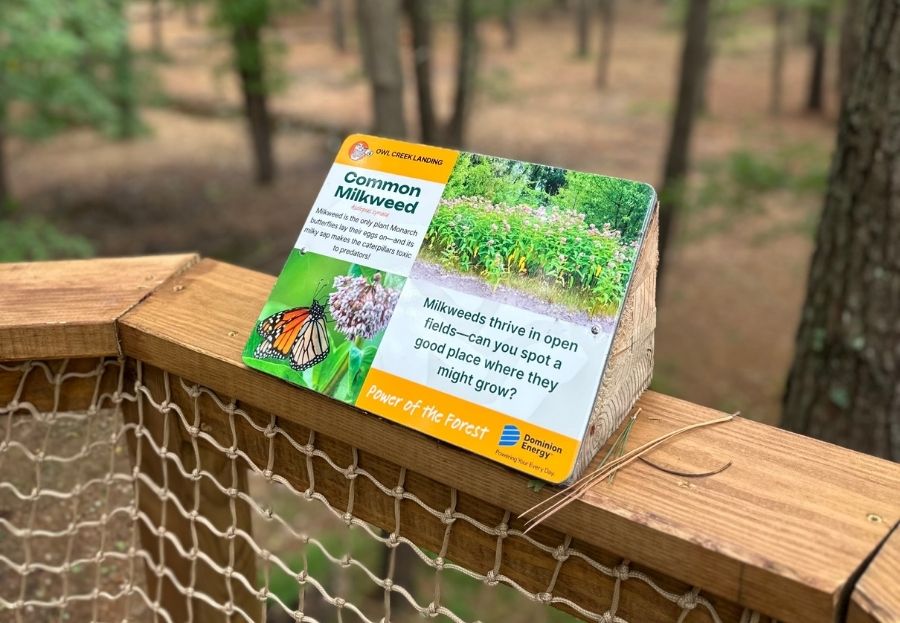
Two sets of signs help bring this learning to life. The Forest Trail signs, located along the ground-level wooded paths, are designed especially for children and focus on how everything in nature is connected beneath the forest’s surface. The Treetop Trail Canopy Walk signs, sponsored by Dominion Energy and placed along the elevated walkway, are geared toward visitors of all ages and introduce the plants and animals that live within the forest ecosystem. Together, these signs encourage curiosity, observation and a deeper appreciation for the beauty of the area.
Introducing Fungy the Fungi and Rootsy the Tree: Your Guides on the Forest Trail
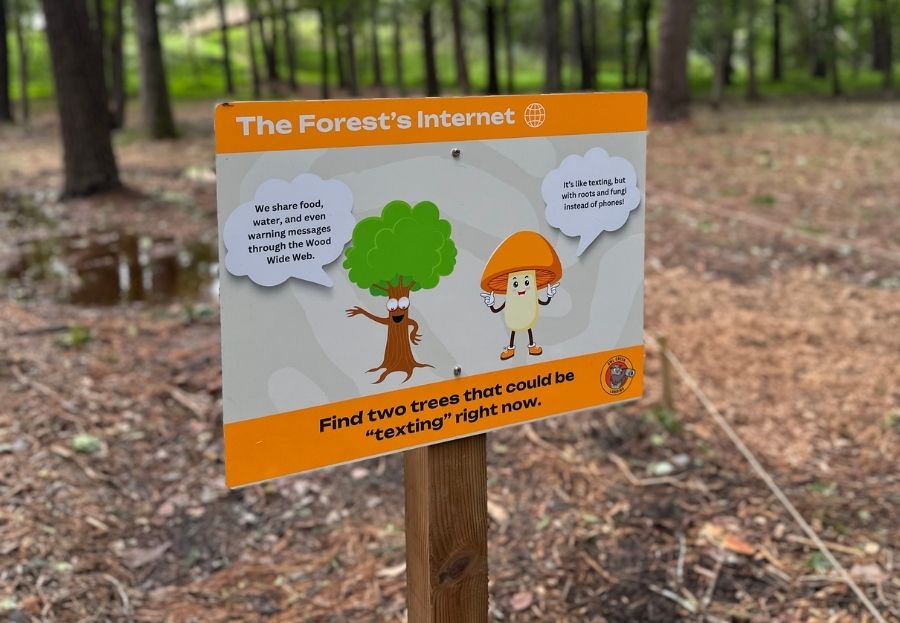
It’s amazing how much children, even very young ones, understand how connected the world is through phones, texting and wifi. Nature works in much the same way, using partnerships and natural systems to stay connected. At Owl Creek Landing, we’ve brought this idea to life through a playful concept called the Wood Wide Web that helps visitors see the forest as an interconnected community.
Fungy the Fungi and Rootsy the Tree serve as friendly guides through the giant “forest internet.” Featured on signs throughout the Forest Trail, Fungi and Rootsy use humor and simple language to explain how trees and fungi share water, nutrients and warning messages—much like texting and messaging apps. The sign prompts encourage children to observe forest connectivity, such as finding two trees that could be “texting” underground right now.
As visitors move along the trail, the signs reveal how the forest network supports cooperation and survival. For example, trees can send out “alerts” when insects attack, giving neighboring trees time to prepare defenses by making special chemicals to fight the bugs—much like a group text warning friends of trouble. Each sign also encourages kids to engage directly with their surroundings through simple actions, such as looking for bugs or spotting signs of fungal growth on the forest floor.
Another concept that kids can easily grasp is a “mother tree”—a larger, older tree that shares nutrients with smaller or shaded trees to help them grow. Meanwhile, fungi act like underground delivery drivers, transporting minerals and water in exchange for sugars made by trees. Together, these relationships help young visitors understand that forests depend on teamwork to stay healthy.
The Forest Trail experience concludes with an important message from Fungy and Rootsy: the Wood Wide Web stays healthy when people respect it. Staying on paths, leaving plants undisturbed and treating the soil with care help protect the unseen forest network.
These fun signs explain nature concepts in ways that young people can understand and relate to while encouraging them to be active by looking for tall trees and mushrooms along the forest floor. The interactive approach turns a walk in the woods into a hands-on science lesson, and the best part is that kids won’t even realize it because they’ll be having fun with Fungy the Fungi and Rootsy the Tree!
Spot Flora and Fauna Along the Canopy Walk
While the Forest Trail signs focus on the hidden connections beneath and around the ground, the Canopy Walk signs invite visitors to lift their eyes and notice the life all around them. Sponsored by the local utility company Dominion Energy, the educational signs spotlight some of the plants and animals that call Owl Creek Landing and the surrounding area home. The signs, located throughout the Canopy Walk 35 feet above the ground, provide simple facts and encourage readers to look for the featured item.
One featured fauna is the Sweetgum, a familiar but often overlooked part of the forest canopy. The Sweetgum is a tree with glossy, star-shaped leaves that provides shade to visitors. In the fall, watch out—the leaves turn brilliant shades of yellow, orange and red! On the ground, visitors may notice its spiky seed pods, which are called “gumballs.” The spikes help to preserve the seeds, as animals are thwarted from easily accessing their insides. The gumballs are also an easy way for visitors to identify the tree even after the leaves have fallen.
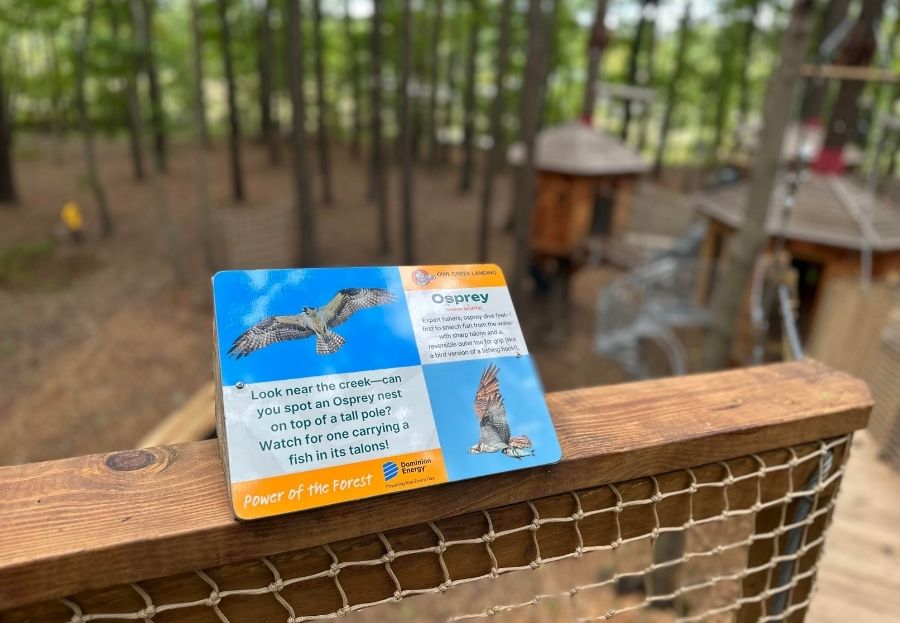
The osprey is another item highlighted on the signs. The osprey stands out as one of the most dramatic birds that can be seen at Owl Creek Landing. Known as expert fishers, ospreys dive feet-first into the water to snatch fish with powerful talons, using a specialized toe that helps them grip slippery prey. Watch for osprey flying above or perched high on poles, especially near the adjacent Owl Creek. While Owl Creek Landing is immersed in the forest, the osprey is a reminder that the forest and nearby waterways are closely linked and support species that move easily between land, air and water.
Adventure That Inspires Curiosity
The Forest Trail and Canopy Walk signs at Owl Creek Landing are a fun way to weave in learning into an outdoor adventure. Fungy and Rootsy, with their interactive prompts, introduce children to how trees, fungi and soil work together beneath the ground. The Canopy Walk signs, focused on animals and plants, encourage visitors of all ages to look around the environment while learning how each living thing plays a role in the larger ecosystem. Curiosity and observation will sneak in without kids even realizing that they’re learning along the way!
The forest at Owl Creek Landing changes with the seasons. A spring visit might include listening for treefrogs or spotting fresh green growth, whereas fall brings vibrant colors as Sweetgum leaves shift to shades of yellow, orange and red. To experience these seasonal changes firsthand, consider an annual pass to see how the forest transforms. Learn more about annual pass options, and plan your next visit.